
2yr, 1-2 ft, American Persimmon
Meet the American Persimmon (Diospyros virginiana) — A Sweet Native Fruit Tree with Exceptional Wildlife and Wood Value 🌿
The American Persimmon is one of North America’s most distinctive native fruit trees, prized for its exceptionally sweet, custard-like fruit, attractive fall color, wildlife value, and beautiful, durable wood. Native to the eastern and central United States, this adaptable tree has been enjoyed by Indigenous peoples and generations of American homesteaders. Once fully ripe, its fruit develops an intensely sweet flavor that has earned it a place among the finest native fruits.
Sweet, Custard-Like Native Fruit 🟠
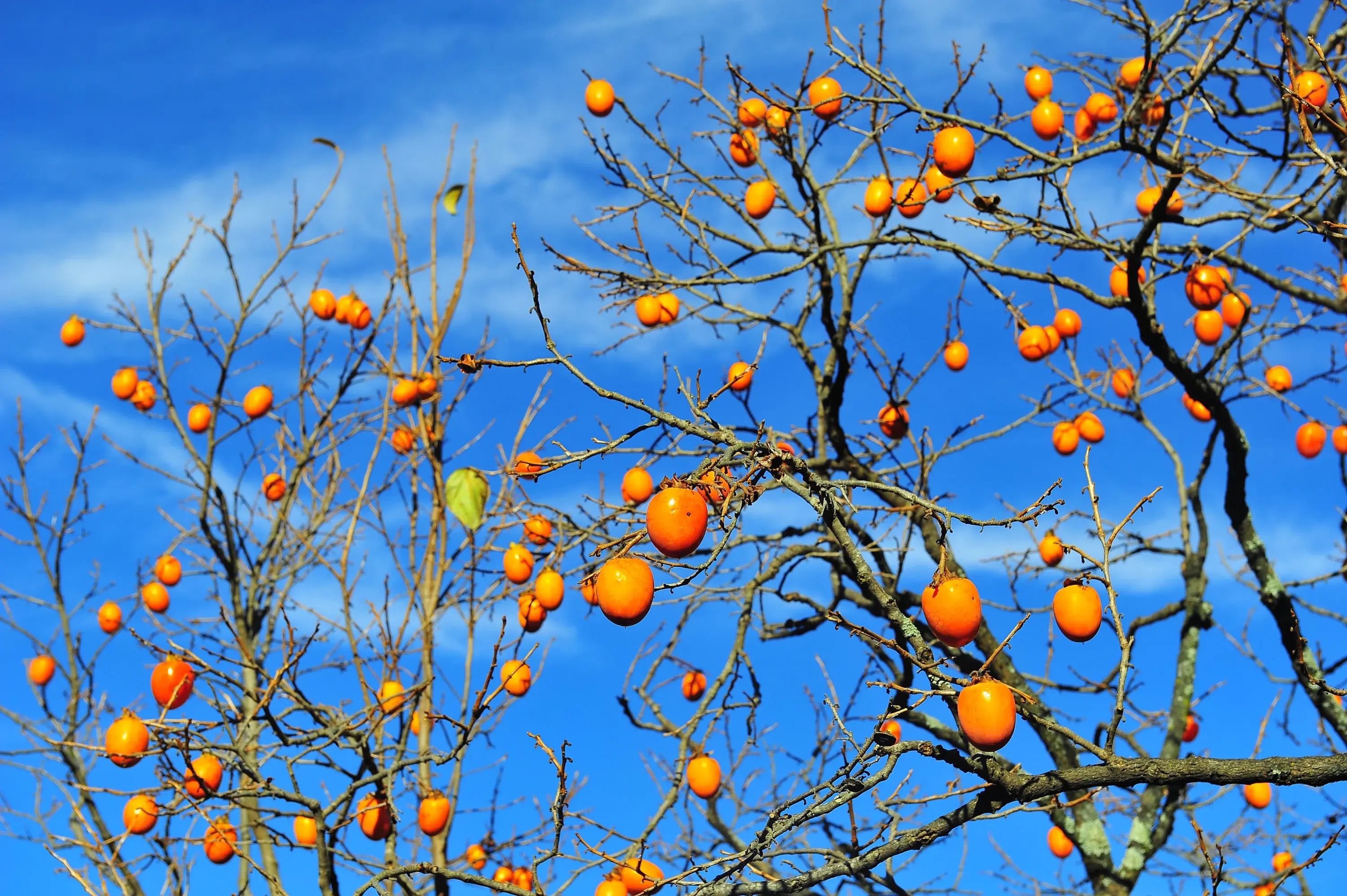
The American Persimmon produces small, round fruits that ripen in autumn from green to yellow-orange, orange, or reddish-purple. When completely ripe, the soft fruit becomes extraordinarily sweet and has a rich, honey-like, caramelized flavor with a smooth, custard-like texture.
The fruit can be enjoyed:
Fresh from the tree when fully ripe
Dried for winter storage
In breads, cakes, and cookies
In puddings and pies
In jams and preserves
In smoothies and other desserts
Fermented into traditional persimmon beer and other beverages
One of the most important things to know about American Persimmon is that the fruit should be allowed to become fully ripe before eating. Unripe fruit can be extremely astringent due to its tannins, creating a powerful puckering sensation.
A Native Fruit with a Long Harvest Season 🍂
Persimmons typically ripen in fall, often after the first frosts in colder parts of their range. This makes them especially valuable as a late-season food source.
Ripe fruit may remain on the tree for some time, while fallen persimmons can continue ripening on the ground. This extended availability provides an important late-season harvest for both people and wildlife.
Male and Female Trees: Understanding Persimmon Pollination 🌳
American Persimmons are generally dioecious, meaning male and female flowers occur on separate trees.
Female trees produce fruit
Male trees produce pollen but generally do not produce fruit
Some trees can occasionally produce flowers of both sexes
A male tree is generally needed nearby for reliable fruit production on female trees
Because young trees cannot reliably be sexed before flowering, planting multiple trees is a good strategy when fruit production is important.
Interestingly, some American Persimmon trees can produce fruit without fertilization, but fruit from pollinated flowers will generally contain seeds while seedless fruit can occur without pollination.
Wildlife and Ecological Benefits 🐦
American Persimmon is an outstanding wildlife tree, particularly because it provides food late in the growing season when many other fruits have disappeared.
Its ripe fruit is relished by:
Deer
Raccoons
Opossums
Foxes
Coyotes
Black bears
Wild turkeys
Quail
Songbirds and other wildlife
The dense foliage also provides cover and habitat, while the flowers support native pollinators.
For a food forest or wildlife planting, the persimmon can serve as an important bridge between summer and winter food availability.
Traditional and Cultural Uses 🌿
American Persimmon has a long history of use by Indigenous peoples throughout its native range.
The fruit was eaten fresh, dried, or incorporated into various foods. Indigenous knowledge of persimmon processing was later adopted by European settlers, who also developed numerous traditional recipes.
Historically, ripe persimmons were used to make:
Cakes and breads
Puddings
Pies
Preserves
Sweetened pastes
Fermented beverages
The fruit's exceptional sweetness made it an important natural sweetener before refined sugar was widely available.
Wood: Dense, Strong, and Related to Ebony 🪵
American Persimmon belongs to the genus Diospyros, the same genus that contains the true ebony trees. Its heartwood is exceptionally hard, dense, and durable.
Persimmon wood has traditionally been used for:
Tool handles
Shuttles and bobbins
Furniture
Specialty woodworking
Turned objects
Sporting equipment
One particularly famous use is in golf club heads, where persimmon wood was historically prized for drivers and other wooden clubs because of its hardness, strength, and shock resistance.
The wood is also valuable to woodworkers seeking a distinctive domestic hardwood.
Firewood Potential 🔥
American Persimmon makes excellent firewood because of its dense, heavy wood.
Burns hot and steadily
Produces long-lasting coals
Has good heat output for its size
Works well for heating and campfires
Although the tree is not generally grown specifically for firewood, wood from pruning, storm damage, or harvested trees can be put to excellent use.
Beautiful Bark and Seasonal Interest 🍂
American Persimmon becomes increasingly distinctive with age. Mature trees develop dark gray to nearly black bark divided into deep, blocky plates, giving the trunk a rugged, almost alligator-like appearance.
Its foliage turns attractive shades of yellow, orange, and sometimes reddish-purple in autumn, while the bright orange fruits stand out dramatically against the fall landscape.
Landscape and Food Forest Uses 🌳
American Persimmon is an excellent choice for:
Native food forests
Homestead orchards
Edible landscapes
Wildlife food plots
Woodland edges
Naturalized plantings
Large residential landscapes
Agroforestry systems
Its deep-rooted nature and adaptability allow it to perform in conditions where many cultivated fruit trees struggle.
Because the fruit can become messy when it falls, planting it away from patios, sidewalks, and driveways is often preferable.
Care and Maintenance 🌱
Watering: Moderate while establishing; reasonably drought tolerant once mature
Soil: Adaptable to many soil types, including relatively poor soils
Sun: Full sun produces the best fruit crops
Pruning: Minimal; young trees benefit from training to establish a strong structure
Pollination: Plant multiple trees or ensure a compatible male is nearby when fruit production is important
Pests/Diseases: Generally hardy and relatively low maintenance
Harvest: Allow fruit to become completely soft and ripe before eating
A Native Fruit Tree Worth Growing for Generations ✨
The American Persimmon (Diospyros virginiana) is a remarkable combination of food, wildlife habitat, beautiful wood, and native resilience. Its sweet autumn fruit provides one of the most distinctive flavors available from a North American native tree, while its dense hardwood offers practical value long after its productive years.
For a homestead, food forest, wildlife planting, or native orchard, the American Persimmon is a true multi-purpose tree—providing delicious fruit for people, abundant food for wildlife, valuable hardwood, excellent firewood, and beauty throughout the seasons.