Exploring Permaculture: Key Principles, Ethics and Practices for Sustainable Living

Updated: Jul 16

What Is Permaculture?
Permaculture offers a practical way to create sustainable living environments by working with nature instead of against it. It combines thoughtful design, ethical values, and practical techniques to build systems that are productive, resilient, and regenerative. If you want to learn how to grow food, manage resources, and live more harmoniously with the planet, understanding permaculture is a great place to start.
Permaculture is a design philosophy that mimics natural ecosystems to create sustainable human habitats. The term combines "permanent" and "agriculture," but it has grown beyond farming to include all aspects of sustainable living. It focuses on creating systems that are self-sustaining, efficient, and beneficial to the environment.
The core idea is to observe how nature works and apply those patterns to human needs. This means designing gardens, homes, communities, and economies that use resources wisely, reduce waste, and support biodiversity.
The Three Ethics of Permaculture
Permaculture is built on three fundamental ethics that guide every decision and design:

Care for the Earth
Protecting soil, water, plants, and animals is essential. Healthy ecosystems support all life, including humans. This ethic encourages practices that restore and maintain natural systems.
Care for People
Meeting human needs in a way that supports well-being and community is vital. This includes access to food, shelter, education, and social connection.
Fair Share
Sharing surplus resources and limiting consumption ensures that ecosystems and communities remain balanced. It promotes equity and prevents overuse of resources.
These ethics create a foundation for sustainable living that respects both nature and people.
Key Principles of Permaculture Design
Permaculture uses a set of design principles to create effective and resilient systems.
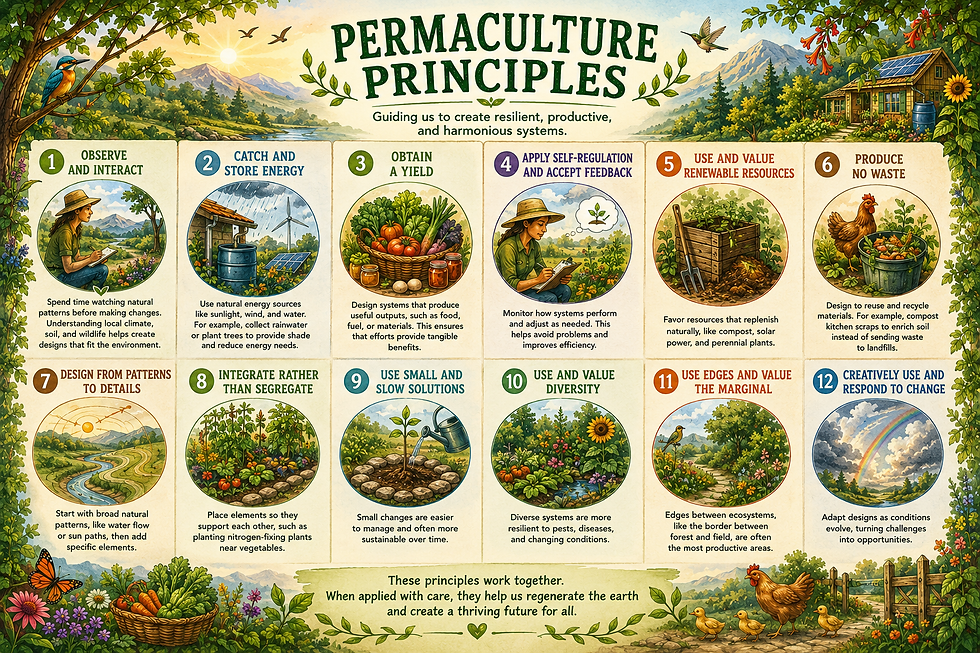
Observe and Interact
Spend time watching natural patterns before making changes. Understanding local climate, soil, and wildlife helps create designs that fit the environment.
Catch and Store Energy
Use natural energy sources like sunlight, wind, and water. For example, collect rainwater or plant trees to provide shade and reduce energy needs.
Obtain a Yield
Design systems that produce useful outputs, such as food, fuel, or materials. This ensures that efforts provide tangible benefits.
Apply Self-Regulation and Accept Feedback
Monitor how systems perform and adjust as needed. This helps avoid problems and improves efficiency.
Use and Value Renewable Resources
Favor resources that replenish naturally, like compost, solar power, and perennial plants.
Produce No Waste
Design to reuse and recycle materials. For example, compost kitchen scraps to enrich soil instead of sending waste to landfills.
Design from Patterns to Details
Start with broad natural patterns, like water flow or sun paths, then add specific elements.
Integrate Rather Than Segregate
Place elements so they support each other, such as planting nitrogen-fixing plants near vegetables.
Use Small and Slow Solutions
Small changes are easier to manage and often more sustainable over time.
Use and Value Diversity
Diverse systems are more resilient to pests, diseases, and changing conditions.
Use Edges and Value the Marginal
Edges between ecosystems, like the border between forest and field, are often the most productive areas.
Creatively Use and Respond to Change
Adapt designs as conditions evolve, turning challenges into opportunities.
Practical Permaculture Practices
Permaculture is not just theory. It includes many hands-on techniques that anyone can apply at home or in the community.
Food Production
Polyculture Gardens
Grow multiple crops together to mimic natural ecosystems. This reduces pests and improves soil health.
Permaculture Food Forests
Create layered gardens with trees, shrubs, herbs, and ground covers that produce food year-round.
Composting and Soil Building
Turn organic waste into rich soil amendments to improve fertility and water retention.
Rainwater Harvesting
Collect and store rainwater for irrigation, reducing reliance on external water sources.
Water Management
Swales and Contour Trenches
Dig shallow ditches along land contours to slow water runoff and increase infiltration.
Greywater Systems
Reuse household wastewater safely for garden irrigation.
Ponds and Wetlands
Build small water bodies to support wildlife and store water.
Energy and Waste
Solar Energy Use
Install solar panels or passive solar designs to reduce fossil fuel use.
Waste Reduction
Practice zero-waste principles by reusing materials and minimizing packaging.
Natural Building Materials
Use earth, straw, wood, and other renewable materials for construction.
Community and Social Practices
Seed Saving and Sharing
Preserve local plant varieties and share seeds within the community.
Skill Sharing and Education
Teach permaculture principles and techniques to others.
Local Food Networks
Support farmers markets, community gardens, and cooperative food systems.
Examples of Permaculture in Action

Earthships in New Mexico are innovative, sustainable homes built from natural and recycled materials, designed to be energy-efficient and self-sufficient.
The Permaculture Research Institute in Australia demonstrates large-scale food forests and water management systems that restore degraded land.
Urban Permaculture Gardens in cities like Portland, Oregon, show how small plots can produce abundant food and support biodiversity.
Community Composting Projects turn neighborhood organic waste into valuable soil, reducing landfill use and building community ties.
Getting Started with Permaculture
You don’t need a large farm to practice permaculture. Start small with these steps:
Observe your space and note sun, wind, water flow, and existing plants.
Begin composting kitchen scraps to improve soil.
Plant a small polyculture garden with companion plants.
Collect rainwater or use water-saving irrigation.
Learn from local permaculture groups or online resources.
Share your experiences and resources with neighbors.
Permaculture is a journey of continuous learning and adaptation.


Comments